Self-organization: a ubiquitous phenomenon
Research into self-organizing networked systems does not only have technical and user-oriented aims, it also enables a high degree of interdisciplinary. We encounter self-organizing systems on an almost daily basis: In the formations of swarms of fish and migratory birds, the interplay of termites when they build their hills, or the activity of body cells during the healing of wounds. In many areas of nature, single individuals or organisms work together without central coordination, but in perfect harmony. Large areas of the economy have already been functioning for many years according to this paradigm.
Self-organizing systems in technical science
In self-organizing systems, the instances involved form decisions based on limited local knowledge. This leads to a desired emergent behavior of the entire system. Naturally self-organizing systems also possess many characteristics that are of value in technical systems:
It is therefore no wonder that technical science has now discovered these and would like to implement them wherever centrally coordinated systems reach their limitations.
"The economic future of the area of self-organization is rated very positively", says Professor Hermann Kopetz of the Technical University of Vienna. "At present the limitations of the complexity of centrally planned systems is visible in many places. Through the use of the principles of self-organization we hope to better control the ever-increasing complexity of large systems, and to significantly increase their reliability."
Enormous opportunity
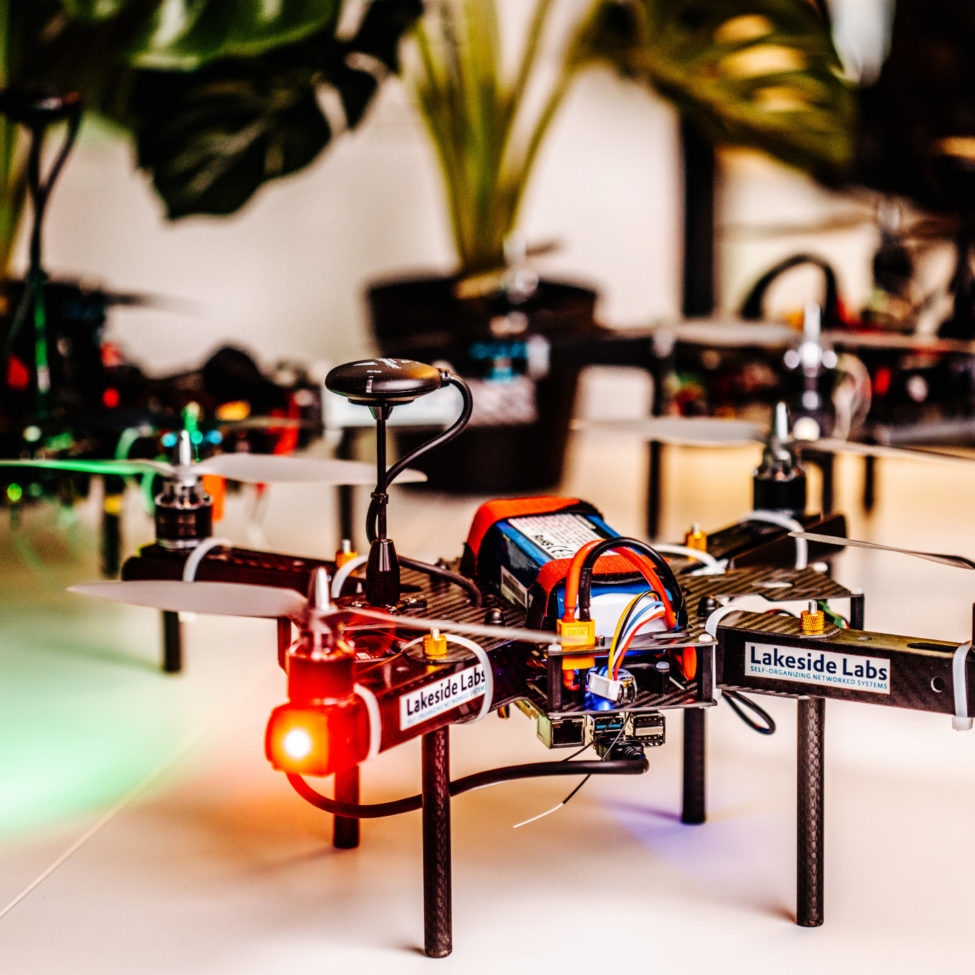
For a new research unit like Lakeside Labs, the choice of such an internationally significant futuristic subject in addition to "self-organizing networked systems" presents an enormous opportunity. The research results will have a very positive influence on the further development of Carinthia from both a scientific and economic point of view.